Safety Belt Solutions for Commercial and Specialized Vehicles
From buses and trucks to construction equipment and tractors, different vehicle applications require restraint systems designed around their operating environment, occupant position and intended use.
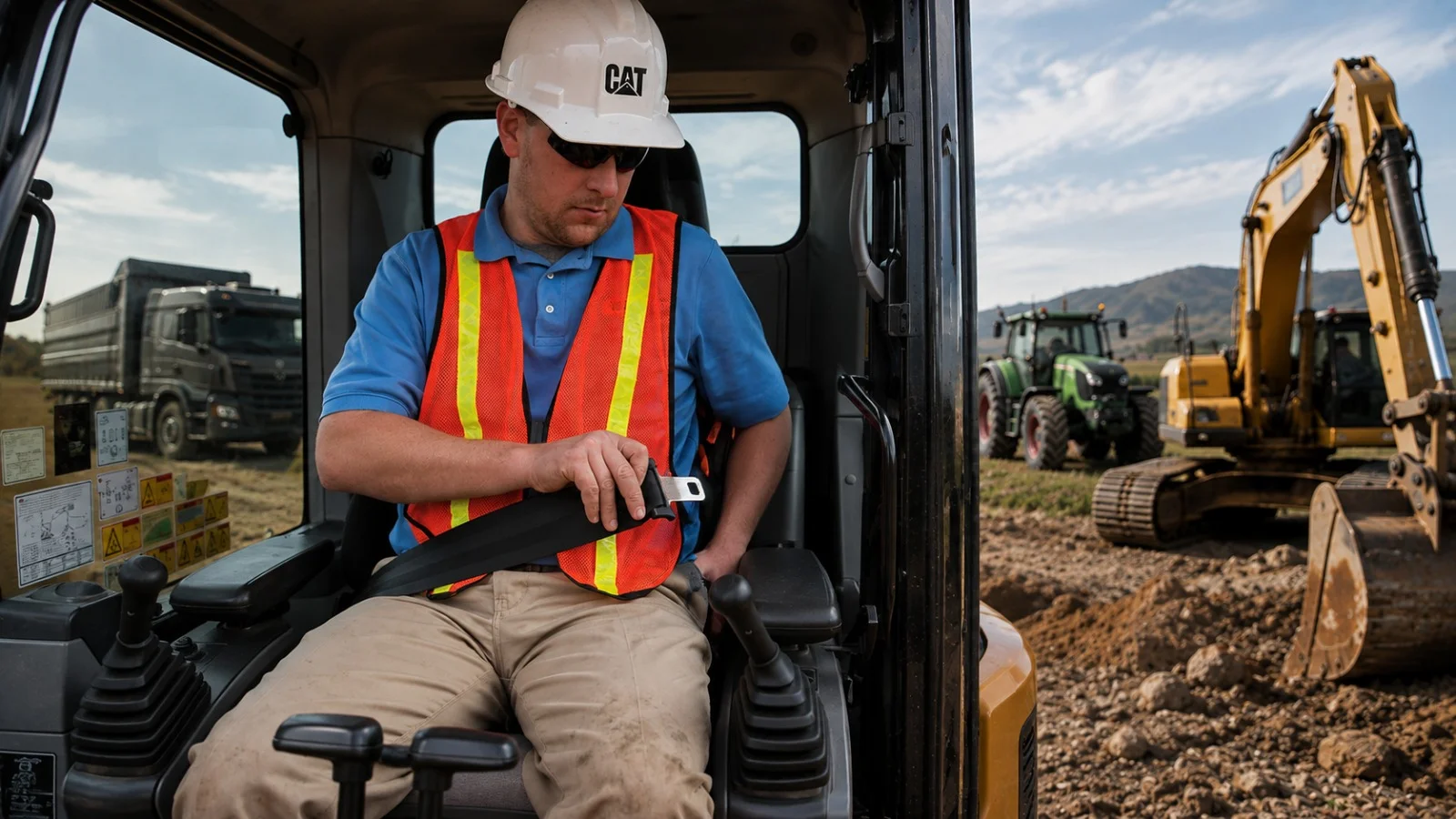
When we think about safety belts, passenger cars are usually the first vehicles that come to mind. However, occupant restraint is equally important in vehicles used for transportation, construction, agriculture and other specialized applications.
Different vehicles operate under different conditions. For this reason, safety belt systems need to be designed according to the vehicle, operating environment and specific occupant safety requirements.
A restraint system suitable for a passenger vehicle may not address the same operational needs as a system used in a bus, truck, tractor or construction machine.
Why Vehicle Type Matters in Safety Belt Design
Occupant restraint starts with a common objective: helping keep the driver, passenger or operator securely positioned. However, the conditions under which this restraint system must operate can vary considerably between vehicle categories.
Vehicle Movement
The motion characteristics of a bus, heavy truck or construction machine are different from those of a conventional passenger car.
Operating Environment
Some vehicles operate mainly on roads, while others work on uneven terrain, construction sites or agricultural land.
Occupant Position
Seating geometry, driver movement and the required working position can influence restraint system design.
Intended Use
Long-distance operation, passenger transport or intensive off-road use can create different restraint requirements.
Application-specific safety means evaluating the entire operating scenario rather than selecting a safety belt solely because it fits physically within the vehicle.
Safety Belts for Commercial Vehicles
Commercial vehicles such as buses and minibuses transport large numbers of passengers every day. In these applications, safety belt systems need to provide reliable restraint while remaining practical and comfortable for regular use.
Passenger restraint systems may need to account for frequent boarding, different occupant sizes, repeated daily use and the seating layout of the vehicle.
A suitable safety belt system can help keep occupants securely positioned during sudden braking, collisions or other unexpected vehicle movements.
Passenger Comfort
Safety belts used in buses and minibuses should provide effective restraint without creating unnecessary restrictions during normal vehicle operation.
Regular Daily Use
Commercial transport applications require components designed for repeated use and consistent operation throughout the vehicle’s service life.
Safety Belts for Trucks
Truck drivers spend long periods on the road and may encounter a wide range of driving conditions. Reliable occupant restraint is therefore an important part of truck safety.
Safety belt systems for trucks need to provide secure restraint while supporting the driver’s comfort during extended periods of operation. The driver must remain protected without the restraint system interfering unnecessarily with normal driving movements.
Long operating periods make the balance between restraint performance and everyday usability particularly important in commercial truck applications.
This balance is one of the reasons why safety belt development needs to consider the actual vehicle application rather than treating every seating position in the same way.
Safety Belts for Construction Equipment and Tractors
Construction equipment and tractors operate in environments that can involve uneven terrain, vibration, sudden movements and challenging working conditions.
In these applications, occupant restraint is not only related to conventional road collisions. Keeping the operator securely positioned in the seat is also important during demanding machine operation.
Uneven Terrain
Irregular ground conditions can create continuous movement around the operator’s seating position.
Machine Vibration
Construction and agricultural equipment may operate for long periods under vibration and repetitive motion.
Sudden Vehicle Movement
Changes in terrain, machine direction or operating conditions can result in unexpected occupant movement.
Operator Positioning
Effective restraint supports a more controlled operator position while the machine is performing demanding tasks.
Different Vehicles, Different Restraint Requirements
There is no single safety belt configuration that is suitable for every vehicle type. Each application introduces different mechanical, operational and occupant-related considerations.
| Vehicle Application | Typical Operating Conditions | Key Restraint Consideration |
|---|---|---|
| Buses & Minibuses | Frequent passenger use, urban and intercity transportation | Practical everyday use combined with reliable passenger restraint |
| Trucks | Long driving periods and varying road conditions | Driver comfort combined with secure restraint |
| Construction Equipment | Vibration, uneven terrain and intensive machine movement | Supporting controlled operator positioning |
| Tractors & Agricultural Vehicles | Agricultural land, inclines and irregular surfaces | Reliable restraint during demanding working conditions |
| Light Rail & Specialized Vehicles | Application-specific operating environments | Restraint architecture matched to the specific vehicle |
Why Application-Specific Safety Matters
A commercial vehicle, truck, tractor and construction machine each have different requirements. Factors such as vehicle movement, operating environment, occupant position and intended use all influence the design of an appropriate restraint system.
For this reason, safety belt development requires more than selecting a standard component. It requires understanding the specific application and developing a solution that provides reliable restraint under its intended operating conditions.
Understand the Vehicle Application
The first step is identifying how and where the vehicle will operate, including typical movement and environmental conditions.
Define Occupant Requirements
Seating position, expected occupant movement and everyday usability need to be considered together.
Select the Appropriate Restraint Architecture
The safety belt configuration can then be developed according to the specific application rather than relying on a one-size-fits-all approach.
Verify Through Engineering and Testing
Development is supported by R&D and testing and quality processes to evaluate the solution according to the intended vehicle application.
One Safety Goal, Different Applications
Although vehicle types and operating conditions may vary, the fundamental purpose remains the same: keeping drivers, operators and passengers securely restrained.
From commercial vehicles and trucks to construction equipment, tractors and light rail systems, application-specific safety belt solutions play an important role in creating safer mobility.
ARKPRES develops and supplies safety belt solutions for a wide range of vehicle applications, supported by engineering, testing and quality processes designed around different safety requirements.
For additional technical topics related to occupant restraint, visit ARKPRES Insights. For a specific vehicle application, ask an ARKPRES expert about the appropriate restraint solution.